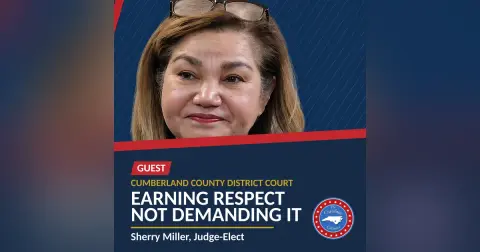
Judge-Elect Sherry Miller on Family Court, Pro Se Litigants and Trial by Fire



 RSS Feed
Key Takeaways
- Judge-Elect Sherry Miller brings years of public defense experience to Cumberland County's District Court, preparing her for the realities of the bench through a true trial by fire.
- Transitioning from an advocate to a judge requires letting go of partisanship and the instinct to fight for a specific client, focusing instead on objective facts and equitable treatment.
- Pro se litigants often struggle in court due to unfamiliarity with the rules of civil procedure, making structured guidance and clear presentation of evidence essential in the courtroom.
- Family court is deeply rooted in layers of trauma, requiring judges to look beyond procedural technicalities and understand the emotional realities of the parties involved.
- Miller emphasizes a service-oriented approach to the judiciary, aiming to earn public respect through active listening, fairness, and an open mind.
Peter Pappas welcomes back Sherry Miller, Cumberland County's newly elected District Court judge for Seat 3, who takes the bench in January in the seat Judge David Hasty is leaving at retirement. A Fayetteville native and Fort Bragg kid, she talks about growing up with a mother from Korea, learning English in first grade, the Lewis Chapel teacher who sent her toward journalism, and why she started her career in 1995 at the Cumberland County Public Defender's Office, where you learn by trial by fire. She explains what she'll hear first in civil court, why family court is where she wants to land, what an advocate has to unlearn to become a judge, and what people representing themselves should know before they walk into her courtroom. She also talks about the vulnerable people she has represented, and about becoming colleagues with her former law partner, Judge Toni King. Find every conversation at thecarolinacabinet.com. 00:00 Intro 00:22 Welcome, Judge-Elect Sherry Miller 02:15 The story she'd have written at 22 04:54 Miss Mansfield and Cumberland County schools 06:22 Growing up a Fort Bragg kid 08:12 Why she chose public defense 10:19 A two-day jury trial and picking a jury 13:43 Law partners, now colleagues: Judge Toni King 15:03 What she did differently this time 16:58 What District Court hears 17:57 From advocate to judge 18:56 Why family court matters 23:06 Advice for people representing themselves 24:50 The vulnerable people courts serve 28:13 Earning your respect
Frequently Asked Questions
Who is Sherry Miller?
Sherry Miller is Cumberland County's newly elected District Court judge for Seat 3, taking the bench in January after working for years in the Cumberland County Public Defender's Office.
What types of cases will Judge-Elect Sherry Miller hear first?
She will initially hear civil court cases such as evictions and car accident claims before eventually transitioning into family court.
What is the biggest challenge for pro se litigants in court?
Pro se litigants often struggle because they do not know the rules of civil procedure or how to properly introduce evidence and establish a record.
What is Judge Sherry Miller's background?
She is a Fayetteville native and former public defender who started her law career in 1995 and previously built a law practice with fellow Judge Toni King.
Peter: the four person. true so that that was really good. Okay. Yeah. Well so well then riddle me this like I just finished watching for like the second time the people versus OJ Simpson. It was the Netflix special. Okay. Well they had already impaneled the jury and then right before they start to deliberate or get to the closing Then they started shifting jurors around because they found more stuff out about the jurors that they had conflicts with. I mean, is that possible that you could pull a juror later on? Like after it's been or is that just movie make believe? I don't know. I mean, we have twelve, but always an extra, an alternate, just in case someone is, you know, if there's a conflict and they have to be kicked off, then you have the alternate, but they asked him they asked the one juror, have you ever met O. J.? And it's like, No. Then they brought a picture of him at a Hertz auto place shaking hands with OJ. And that was after he was impaneled. After he was impaneled, yeah. Yeah, yeah. Yeah. I don't know. I like to know what's a fact and fiction sometimes with this stuff. And I know that not every court case is as dramatic as what I'm I mean, I follow I follow that I follow that trial, but I don't remember It just seemed like they shifted around after, you know, either I guess just to kick off at that point. But whatever. Anyway. I I don't think we're gonna have that kind of high drama in Cumberland County. Hopefully not. Hopefully not. Yeah, hopefully not. Although Cumberland County can be quite dramatic. Absolutely. Hey, we we we're we we got a little bit of everything here. I don't think people realize that either. So I did not know this and correct me if I'm wrong, but you and now Judge Tony King Y'all built a firm together in 2004. We did. Okay. And now you'll be colleagues. Yes. So is that getting the gang back together? You're gonna be kind nice, yeah. Okay. Because you know, once you become a judge, you can't maintain the same relationship and friendship. I mean, you do, but you don't. You have to create this distance and you don't want any i appearance that you're favoring somebody. because of your former law partner or what have you. So Tony and I had to keep our distance. And and that that was rough because she was like my little sister. I mean she still is. I love her to death. yeah. But we couldn't be as close. So now some of the constraints are gonna be lifted a little bit. Yeah. Yeah, you can talk shop a little more maybe. Okay. All right. Well, and she is, isn't she in charge of the Yeah, she's gonna be like my boss. She's gonna be like your boss. Okay. I hope you were nice to your little sister back in the firm because she's gonna get back to you. let's see. I know you ran w one time before. Was that the only time you ran back in twenty two? Okay. So what do you think you did differently this time? I didn't stress out. Good for you. I was like, you know, it it either happens or it doesn't. The first time I ran, you know, everything's new and you're like I gotta do this, I gotta do that. It's like chaos and it's organized chaos, if that makes sense. Because you know what you're supposed to do. You're supposed to go. How did you know what you're supposed to do? Because I had well, I had no I mean that's I I knew I had to go to community watch meetings, introduce myself to people and things like that. But at the same time, I'm like, What do I say? What do I do? I mean, you know. But so the first time I It was a learning experience. And I felt like I performed fairly well. Ros Rosalind and I got along very well. And, you know, she ultimately won and there was no hard feelings. You know, we're still, you know, good friends. And the second time around, I just felt like, you know, I'm gonna give this another go. Mm-hmm. And I'm sixty. So either this happens or it doesn't. And if it doesn't happen, then I just started. Is it how long is the term? four For four years. Okay. Okay. And then I think they make you leave when you're seventy two. Mm-hmm. So yeah, there was some energy around one of the campaigns I think with there was a seated seated judge that was gonna essentially age out s a year or six months into and that was one of the opposing campaigns kind of sales pitch was like, Look, you know, hey, vote for me, I'll be there. Right, right. which makes sense, but then again, I I don't It's really not that uncommon for a judge to retire and the governor to appoint either. No matter who the governor is. I think that's a pretty common it is thing that happen. I don't think you decide when to run based on your birthday. Right. Right. You just do it. So I know we've probably been over this before, but explain to us now your district court seat, what are you gonna be hearing every day? What kind of cases? Well, I know I'm not gonna start off in family court because I kinda have to make sure that the cases that I have been working on or all resolved. Yeah. So, I'm probably gonna start out in civil court, mainly like eviction or car accident cases or s you know, things like that. And maybe some criminal. Okay. And hopefully in six months they'll put me in family court, which is where, you know, my platform was families matter and, you know, which is where I ultimately would like to be. Okay. And going from being the advocate to the judge, what do you think you have what's the top thing maybe you think you have to unlearn? Something you need to put aside to do your job well? Yeah, as an advocate, you are arguing for your client's best interest. And sometimes that means you have to do it over the other person's best interest, you know, like you know. Your client has an edge here and it's not necessarily fair for the other side, but I shouldn't care about that. Right. I'm only concerned about my client. And so as a judge, I'm gonna have to sit there and go, don't take sides. You know, you you're gonna have to just listen to the facts and apply the law and make a judgment. The problem, the difficulty for me is some lawyers are Very well prepared. Mm-hmm. And some just come in shooting from the hip. Mm-hmm. Mm-hmm. And I can't penalize their clients because of what I know. So I have to focus. That would be the most challenging part. Okay. Yeah, that is tough from being yeah, you definitely switching sides of the of the table there for sure. you mentioned families first. That was part of your campaign promise. And what Is that just because you're good at family law and you love it, or is there something that you see lacking that there there's a need for really bringing family issues to the forefront? I think first and foremost, family law is an extremely emotional area of law. And you have clients who are going through so many types of crises. You know, when you have a family law case, at Be easily connected to a criminal case, such as domestic violence or trespassing or whatever. And then you have the children who are having difficulty adjusting to the parents separating and divorcing, and then they have their trauma. So it's layers and layers and layers of trauma that goes on in a family court case. And sometimes, as a practitioner, I felt as if. Court disregarded those layers and wanted to make it A plus B equals C. When sometimes there's a lot of gray. Yeah, it's it's not as straightforward. So as a judge, because I have that background, I think, you know, if I see a client that or yeah, a party in my courtroom that's acting a little strange, you know, instead of being irritated by that. person, I may, I may take a step back and say, hey, maybe there's something emotionally wrong with that person or they're going to PTSD and I will still treat them. But what does that look like as a judge? Because now so I had the unfortunate pleasure of being in Rosalind's court a few weeks ago. no, no, no, I was a plaintiff. It was okay. Okay. But So I've seen, some I've gotten a taste of a couple days of s being in the court. and she she did not, neither did Judge Oliveira, I was back for another day. I I kind of read their demeanors and all, and there really isn't much you can say, but are are you gonna is are you allowed to interrogate or ask questions of the defense or prosecution or whoever to make sure they get a fair Shake. are you You're not supposed to give legal advice. Right. I think you can ask questions as a judge to So you can kind of guide. Okay. To make sure that th that their clients are getting equitably treated. Okay. I just I don't know what that would look like 'cause you really can't say much. Yeah, yeah. I think the most important thing is letting people and their counsel feel comfortable when they come into your courtroom. Okay. Make them feel like They're gonna be heard. They're not just their case is not gonna get glossed over or rushed. Mm-hmm. And, I will try to maintain a respectful demeanor the entire time. I can't always guarantee someone is gonna act up in court and I'm gonna call them out on it. But for the most part, I think just creating a positive energy or positive outlook in such a horrible environment. Well, yeah, people's guards are already up. They're already at the height of their anxiety. nobody wants to be there. It's worse than the dentist sometimes. and I I will I will observe though, and I think it just comes down to a matter of gender. Judge Oliveira definitely moved things a little bit quicker with some and one poor guy would not stop. It was a bond hearing. He would not stop trying to try his case in front of the judge. And and I'm I'm in the c I'm in the audience even just going like this to the guy like stop talking and just you know so but definitely Rosalind was you could tell more that's just the nature of these people, but not degrading Judge Oliveira at all. I just thought it was comical contrast, you know, you could definitely see. so self represented litigants and what should someone know before they show up to your court? Well, People who decide to go pro se and you can tell the ones that are doing it just because they don't want to spend the money versus the ones that can't really afford it. Pro se people have Their biggest problem is they don't know the law. And so they want to tell you everything. They want to show you everything. And as a judge, you can't do that because you gotta follow the rules of civil procedure. So in my courtroom for the proceeds, I will if and I'll have to go to judge's school to learn if I can do that. there's such a thing? I mean judge's school? Yeah, I'd be going in December. Okay. but you know, I would probably put like a Rules. Number one, if you want to introduce something, first you gotta identify what it is. You know, talk to me like I'm a toddler and I'm learning everything for the first time. So when you have a piece of paper, don't just say here, this is my school records. Let me know, number one, what is this document? My report card. How did you get it? When is it dated? You know, just lay those specifics. And if they allow me to put those kind of instructions. Then yeah, I would I would do that for them. Okay. Yeah, that would be helpful. I I did see some that represented themselves those couple of days. And I was it it they they want to be as descriptive as possible. They want it they're looking for an ally almost in the judge. you know, that's just not how that stuff works. You know, have to stick to just the facts, ma'am. It's very dragnet y from the old dragnet show. so besides families, what are some other populations here that you feel are vulnerable and need to be protected? That you've seen? so when I w had quarterpointed cases, I had a lot of young women with drug problems and mental health problems. at one point I'm like, are they just appointing me these troubled young women to help them? But yeah, so I was a little concern about these women because trafficking based maybe some of the stuff. And it may have been. I didn't do trafficking quart, but a lot of it considering that, North Carolina has a bad trafficking situation. I don't want to say it's a recent development or a new buzzword. It just seems like when you and I were probably thirty years younger, it you didn't hear trafficking. You heard prostitution or you heard drug deal. You didn't hear Right. all that stuff. And now we have a specific court devoted to it. 'cause it is such a prevalent problem. So but back then when you were seeing those cases, you just saw them as needing help. Yeah. It didn't matter. It doesn't matter if they're I mean, it does matter if they're being trafficked. Doesn't matter as you far as you representing them. You have to help them. Right. So, so young women with mental problems and drug problems. And even young men. Okay. I had a client or a defendant And he was my son's age and he had schizophrenia and he got it when he was like I don't know in his nineteen, twenty these guys jumped him for his necklace and they shot him three times and he almost died. And that triggered schizophrenia. Really? Yeah, I didn't know that could I I didn't know that either. So before He was playing football, performing well in school, being just a normal functioning teenager. Now he's just a wreck. And if he doesn't take his medication, he goes off the deep end and commits crimes. And I felt like you know, but for the fact that his parents were very decent people, they did really try to help him and they did, you know, try to get him back on track. But you know, parents can only do so much. Right. Well, and the The court system can only do so much as well. I so Judge King, you know, she does a lot with the trafficking and she I mean, she does a whole lot with that. maybe you can help her out with some of that. Yeah, I plan to. I definitely have I don't think there's I think there's enough to go around in that regard. I think she definitely and I've been to some of her some of her events that she's with the partner organizations that come. I've gone listened. It's very appalling yeah to hear what's been going on, even in our backyard. so If somebody stuck with us for twenty five or thirty minutes, what would you want them to know about the judge elect Sherry May? that number one, I am serving you and I am trying to earn your respect. I'm not gonna demand it. so you will have a judge that will listen to you and have an open mind. Okay. Okay. That's good enough. Yeah. Yeah. I wouldn't be scared of being in front of Judge Miller. Good. I don't know. I don't know. Maybe. I don't know. I don't I don't well depends which side of the table I'm on. I don't know. I think I think there'd be equitable treatment. And that's one that is one constant I did see in my little two days experience was the we're doing a just like our schools get under underappreciated, I think the court system down there as well. Yeah. and yes, we can always do better. Yeah. you can fix e court. No, it's not your fault, but I've had some issues with e-courts and eviction filings. I'm like it I went down there with the Mondays are a nightmare. yes, they are. You can you know, you get that little circle that keeps spinning. Mm-hmm. Yeah. Yeah. Well, I went down there. They took mercy on me and just took the paper in there. So but but everybody watching, thank you for sticking with us. you can always go like, follow, share the Carolina Cabinet dot com. We'll be back Monday night live. with special guest, Mr. Tanner Port from the State VFW Association. With that, have a good afternoon. Thanks for watching.

District Court Judge-elect, District 14, Seat 3
I came to Fayetteville in 1971, when I was six years old, My dad was stationed at Ft. Bragg during that time.
He made Fayetteville our permanent home after he retired. I went to UNC Chapel Hill for my Journalism degree and NCCU school of Law for my Juris Doctorate. I've been practicing law since 1995, I started out in the Public Defender's Office, then worked for the Rogers Firm and eventually opened my own firm in 2004. I am married to Casey Dobson, and I have a son who is a senior at UNC Greensboro.


